
Sewer Lining Solution Saves Northern Illinois Condo Association from Major Excavation
When an 18-unit condominium building in northern Illinois began dealing with sewer line issues, the condo association first moved forward with a traditional sewer replacement. A 5-foot section of the sewer was excavated and replaced, but once the work was complete, the association quickly realized that continuing with additional open-cut replacement would be expensive, disruptive, and difficult to justify.
Between excavation, restoration, resident disruption, and the overall cost of replacing more sewer by digging, the project was becoming cost-prohibitive.
That is when the association began looking for a better solution.
A Less Invasive Option
Trenchless Innovations was contacted to evaluate whether sewer lining could be a practical alternative. Sewer lining is designed to rehabilitate existing underground piping from the inside, often with little to no excavation when proper access points are available.
For a condominium property, that difference matters. Traditional replacement can mean torn-up landscaping, sidewalks, driveways, parking areas, or common spaces. It can also create inconvenience for residents, and additional restoration costs after the pipework is complete.
Because this property needed a more efficient and less disruptive option, sewer lining appeared to be the right fit.
Inspection and Project Planning
Trenchless Innovations sent a team to the property to perform a video inspection of the existing sewer line. The inspection allowed the team to see the condition of the pipe, identify problem areas, confirm access needs, and determine whether the line was a good candidate for trenchless rehabilitation.
After reviewing the sewer footage, Trenchless Innovations provided the association with an estimate for lining the sewer. The proposed scope also included installing a couple of sewer cleanouts, which would create proper access points for the lining work and improve future maintenance access.
With the inspection complete and a trenchless plan in place, the condo association was able to move forward with a solution that avoided the need for a large-scale excavation project.
More Than 200 Feet of Sewer Lined
Trenchless Innovations completed the sewer lining project, rehabilitating more than 200 feet of sewer line at the property.
The lining process restored the sewer from within the existing pipe, creating a new, continuous pipe structure inside the old line. Instead of digging up and replacing long sections of sewer, the team was able to use trenchless technology to address the problem with minimal disturbance to the property.
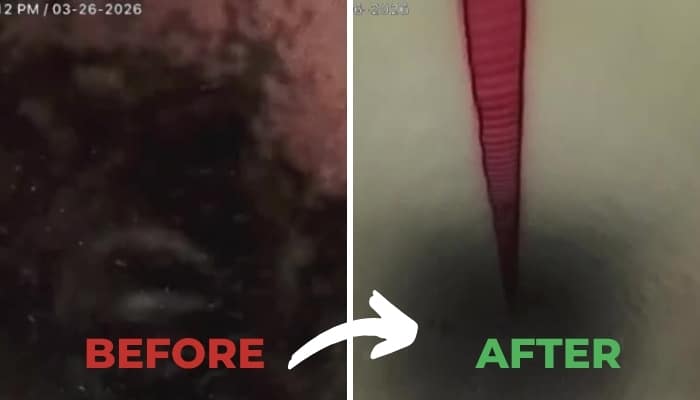
The before-and-after video inspection footage clearly showed the transformation. Before lining, the sewer line showed the issues that led the association to seek a long-term solution. After lining, the pipe had a clean, renewed interior designed to improve flow and extend the service life of the sewer system.
The Right Solution for a Multi-Unit Property
For an 18-unit condominium building, minimizing disruption was a major benefit. Sewer problems affect more than just one homeowner in a multi-unit association. They can impact residents, property managers, board members, budgets, and common areas.
By choosing sewer lining, the association avoided the expense and disruption of replacing hundreds of feet of sewer by excavation. The project provided a practical, cost-effective path forward after traditional replacement had already proven to be too invasive and expensive to continue.
A Smarter Way to Restore Aging Sewer Lines
This project is a strong example of how trenchless sewer lining can help condominium associations, townhome communities, commercial properties, and residential buildings solve underground pipe problems without the burden of major excavation.
For this northern Illinois condo association, the answer was not to keep digging. The answer was to restore the sewer from the inside.
Trenchless Innovations was able to inspect the line, create access where needed, line more than 200 feet of sewer, and provide the association with a long-term solution while helping them avoid the high cost and disruption of traditional sewer replacement.