
Solving Underground Ducting Issues At Your Chicago, IL Home
Many older homes throughout Chicago and the surrounding suburbs were built with underground HVAC duct systems installed beneath concrete slabs. While these systems were once a common construction method, underground ductwork can develop serious problems over time due to moisture intrusion, rust, shifting soil, and aging materials.
At Trenchless Innovations, we specialize in diagnosing and rehabilitating underground air duct systems without the need for major demolition. Our trenchless underground duct lining solutions help homeowners restore airflow, improve indoor air quality, and avoid the mess and expense of tearing up floors throughout the home.
If you have noticed musty odors, cold floors, poor airflow, excessive humidity, or water inside your floor vents, your underground ductwork could be deteriorating beneath your home.
We proudly help homeowners throughout Chicago, Orland Park, Tinley Park, Naperville, Joliet, Oak Lawn, and surrounding Illinois communities restore failing underground duct systems with minimally invasive solutions.
Ready to dig down deep on the quality of your underground ducts - without digging at all? Then send us a message online or call 708-758-5070 today!
Warning: Undefined array key "class" in /home/newtrenchless/public_html/wp-content/themes/hypercore/inc/so-widgets/so-widgets-functions.php on line 51
Underground Air Duct FAQs
Typically, running ducts underground is possible, but it is usually done during the initial building stage of a home, or if major renovations are being performed. If the home currently has underground ducts that are deteriorating, Trenchless Innovations duct repair processes can repair the ducts without the need for extensive removal of flooring.
Underground ductwork is used for various purposes, such as distributing conditioned air between buildings or connecting different parts of a facility. It can be employed in residential, commercial, and industrial settings, providing an efficient way to deliver heating, ventilation, and air conditioning (HVAC) to spaces where above-ground ductwork may not be practical. Proper insulation and protection against moisture and corrosion are essential for the successful implementation of underground ductwork systems.
Well-designed and properly installed ducts can last several decades. Common materials for underground ductwork include galvanized steel or PVC, chosen for their durability and resistance to corrosion. Regular inspections and preventive maintenance, such as ensuring proper drainage and sealing, contribute to longevity. Consulting with HVAC professionals and following local building codes help ensure the effectiveness and extended lifespan of underground ductwork systems.
Yes. Freezing temperatures, snow melt, and trapped moisture can accelerate deterioration in underground duct systems, especially in older homes.
During winter, heating systems run more frequently, making airflow restrictions, leaks, and cold air loss more noticeable throughout the home.
Yes. Winter inspections often reveal issues related to moisture intrusion, airflow loss, and structural damage that may not be obvious during warmer months.
Yes. In many cases, trenchless underground duct lining allows us to rehabilitate underground duct systems without extensive demolition or floor removal.
Groundwater intrusion, poor drainage, condensation, and foundation shifting can all allow moisture to enter underground duct systems.
Yes. Moisture trapped inside underground ducts can create conditions for mold and mildew growth, which may affect indoor air quality.
What Is Underground Ductwork?
Underground ductwork, sometimes called buried ductwork or in-slab duct systems, refers to HVAC air ducts installed below a home’s concrete foundation. These systems are commonly found in older slab homes throughout the Midwest and the Chicagoland area.
Over time, underground ducts can begin to collect:
- Groundwater
- Condensation
- Dirt and debris
- Mold and mildew
- Rust and corrosion
As these issues worsen, homeowners may begin experiencing airflow problems, odors, poor energy efficiency, and indoor air quality concerns.
Unlike traditional overhead duct systems, underground ducts are difficult to access without specialized trenchless technology and inspection equipment.
Our Underground Ducting Services
At Trenchless Innovations, we use advanced trenchless methods to rehabilitate underground duct systems with minimal disruption to your home.
Underground Air Duct Assessment
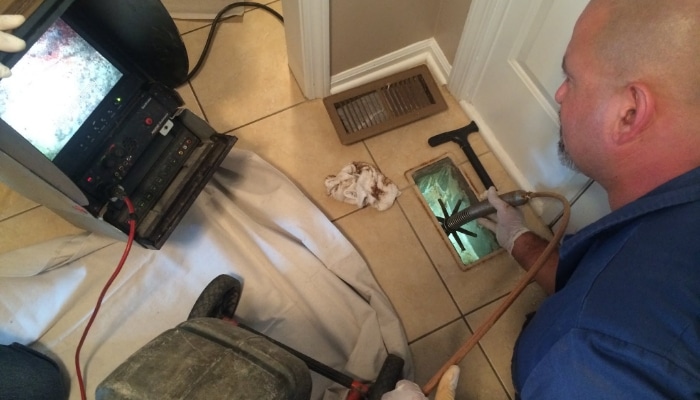
Using specialized camera inspection technology, we evaluate the condition of your underground ductwork to identify:
- Water intrusion
- Rust and corrosion
- Cracks or collapsed sections
- Mold and debris buildup
- Airflow restrictions
This allows us to create a targeted repair strategy designed specifically for your home’s duct system.
Underground Duct Lining Solutions
Our trenchless underground duct lining process creates a durable new interior surface inside the existing ductwork without extensive excavation or floor removal.
Benefits of underground duct lining include:
- Minimal disruption to your home
- Improved airflow efficiency
- Reduced moisture intrusion
- Better indoor air quality
- Extended duct system lifespan
- Lower cost compared to full replacement
Our repair-in-place solutions are designed to restore underground duct systems while preserving your home’s flooring and foundation.
Drainage Solutions For Underground Duct Systems
Water intrusion is one of the leading causes of underground duct failure. We provide drainage solutions designed to redirect moisture away from underground ductwork and help prevent future water damage.
Addressing drainage problems early can help protect both your HVAC system and your home’s indoor air quality.
Signs Your Underground Ductwork May Be Failing
Underground duct systems often deteriorate slowly over time. Many homeowners do not realize there is a problem until symptoms begin affecting comfort, air quality, or HVAC performance.
Common warning signs include:
- Musty or stale odors coming from vents
- Cold floors during winter
- Uneven temperatures throughout the home
- Weak airflow from floor registers
- Water or moisture inside vents
- Increased humidity indoors
- Mold or mildew smells
- Excess dust accumulation
- Sewer-like odors from floor vents
- Rising heating and cooling costs
If you notice several of these symptoms, a professional underground duct inspection can help identify the source of the issue before additional damage occurs.
What Causes Underground Air Duct Damage?
Underground air ducts are constantly exposed to environmental conditions below your home. Over time, moisture and shifting soil can compromise the integrity of the duct system.
Common causes of underground duct deterioration include:
Groundwater Intrusion
Heavy rain, poor drainage, or high water tables can allow water to seep into underground duct systems.
Rust and Corrosion
Many older underground ducts were constructed from metal materials that naturally corrode over time.
Soil Movement
Expanding and contracting soil beneath slab foundations can shift or damage buried ductwork.
Condensation Build Up
Temperature differences underground can create moisture inside the ducts, leading to mold and mildew growth.
Aging Duct Materials
Older underground duct systems may simply reach the end of their functional lifespan after decades underground.
Why Underground Duct Problems Are Common In Older Chicago Homes
Many homes throughout Chicago and surrounding Illinois suburbs were originally built with underground HVAC duct systems installed beneath concrete slabs. While these systems were considered efficient at the time, decades of Midwest weather conditions can take a serious toll underground.
Freeze-thaw cycles, groundwater intrusion, shifting soil, and aging duct materials all contribute to underground duct deterioration throughout the Chicagoland area.
Homes in communities like Orland Park, Tinley Park, Joliet, Oak Lawn, and Naperville commonly experience these issues due to the age and construction style of many slab homes in the region.
Because underground duct damage often develops out of sight, many homeowners live with poor air quality and inefficient airflow for years before discovering the true cause.
What Are The Benefits Of Underground Duct Lining?
During the process, underground air ducts are lined directly through the registers with a liquid liner that hardens into a rubberized duct, correcting problems such as mold and deterioration that allow dirt, sand and other debris to enter the air in your home. The result? A quick, long-lasting and environmentally-friendly solution that completely restores your ductwork and vastly improves the air quality in your home or business.
Another benefit of air duct lining? Cost! Nobody likes expensive home repairs, are we right? Air duct lining saves homeowners hundreds, sometimes thousands of dollars, while providing a solution that lasts for many years. Who wouldn’t enjoy that?
Why Homeowners Choose Trenchless Innovations
Trenchless Innovations is one of the few companies in the Chicago area specializing specifically in underground duct rehabilitation and trenchless duct lining solutions. Our team uses advanced inspection technology and minimally invasive repair methods to help homeowners solve underground duct problems while protecting their homes from unnecessary demolition.
We take time to educate homeowners on the condition of their underground duct systems and recommend solutions designed for long term performance and improved indoor air quality. Whether you are dealing with musty odors, water intrusion, poor airflow, or aging underground ductwork, our team is here to help.
Solve Underground Duct Problems The Right Way With Trenchless Innovations
At Trenchless Innovations, we seek to educate our customers to make the best decisions for their situation. Our website is filled with information to explore common underground duct types, problems, and more. We begin with an assessment to identify your underground air duct issues and areas where repairs are necessary. We recommend our duct lining solution for long-lasting and fully restored underground ductwork. If you have known or suspected issues with your underground ductwork, send us a message online or call 708-758-5070
today!